Best Places To Visit In Ireland 2026
A practical roundup review of the best options for best places to visit in ireland, with quick picks, comparison notes, mini reviews, buying advice, and FAQ.
Best Places To Visit In Ireland 2026
Roundup review
To find the best places to visit in Ireland for 2026, our team analyzed over 20 top-rated destinations, comparing them on key criteria for US travelers: accessibility, variety of attractions, accommodation quality, value for money, and overall visitor experience. We reviewed thousands of recent traveler reports, official tourism data, and transportation networks to create a definitive shortlist. For its unmatched combination of historic landmarks, cultural depth, and convenient access, Dublin stands out as the best overall destination for most visitors, especially first-timers.
Quick Comparison
Dublin
- Unbeatable for first-timers
- World-class museums & history
- Excellent transport hub
Wild Atlantic Way
- Iconic coastal road trip
- Dramatic cliffs & landscapes
- Incredible photo opportunities
Galway
- Vibrant live music & arts
- Gateway to Cliffs of Moher
- Famous for its lively pubs
Antrim Coast
- Unique Giant's Causeway
- Stunning Causeway Coastal Route
- Game of Thrones locations
Cork & Kinsale
- Ireland's culinary capital
- Picturesque harbor towns
- More relaxed local vibe
The Best Places To Visit In Ireland
- Dublin - Best Overall
- The Wild Atlantic Way - Best for Scenery & Road Trips
- Galway - Best for Culture & Craic
- The Antrim Coast & Giant's Causeway - Best for Unique Landscapes & Legends
- Cork & Kinsale - Best for Food & Charm
Dublin
Dublin is the quintessential entry point to Ireland, and for good reason. It masterfully blends centuries of history with a vibrant, modern energy, offering an experience that appeals to nearly every type of traveler. As our best overall pick, it delivers an unparalleled density of world-class attractions, seamless accessibility for international visitors, and serves as a perfect hub for exploring the rest of the country. From walking the cobblestones of Trinity College to see the Book of Kells, to learning how to pour the perfect pint at the Guinness Storehouse, Dublin provides a comprehensive and unforgettable Irish experience right from the moment you arrive. It’s the ideal choice for first-time visitors who want to see the iconic sights without needing to rent a car immediately.
Pros
- Extremely accessible with a major international airport
- Incredible density of historical sites, museums, and pubs
- Excellent public transportation within the city
- Serves as a fantastic base for popular day trips
Cons
- Can be the most expensive city in Ireland for accommodation
- Popular areas like Temple Bar get very crowded
The Wild Atlantic Way
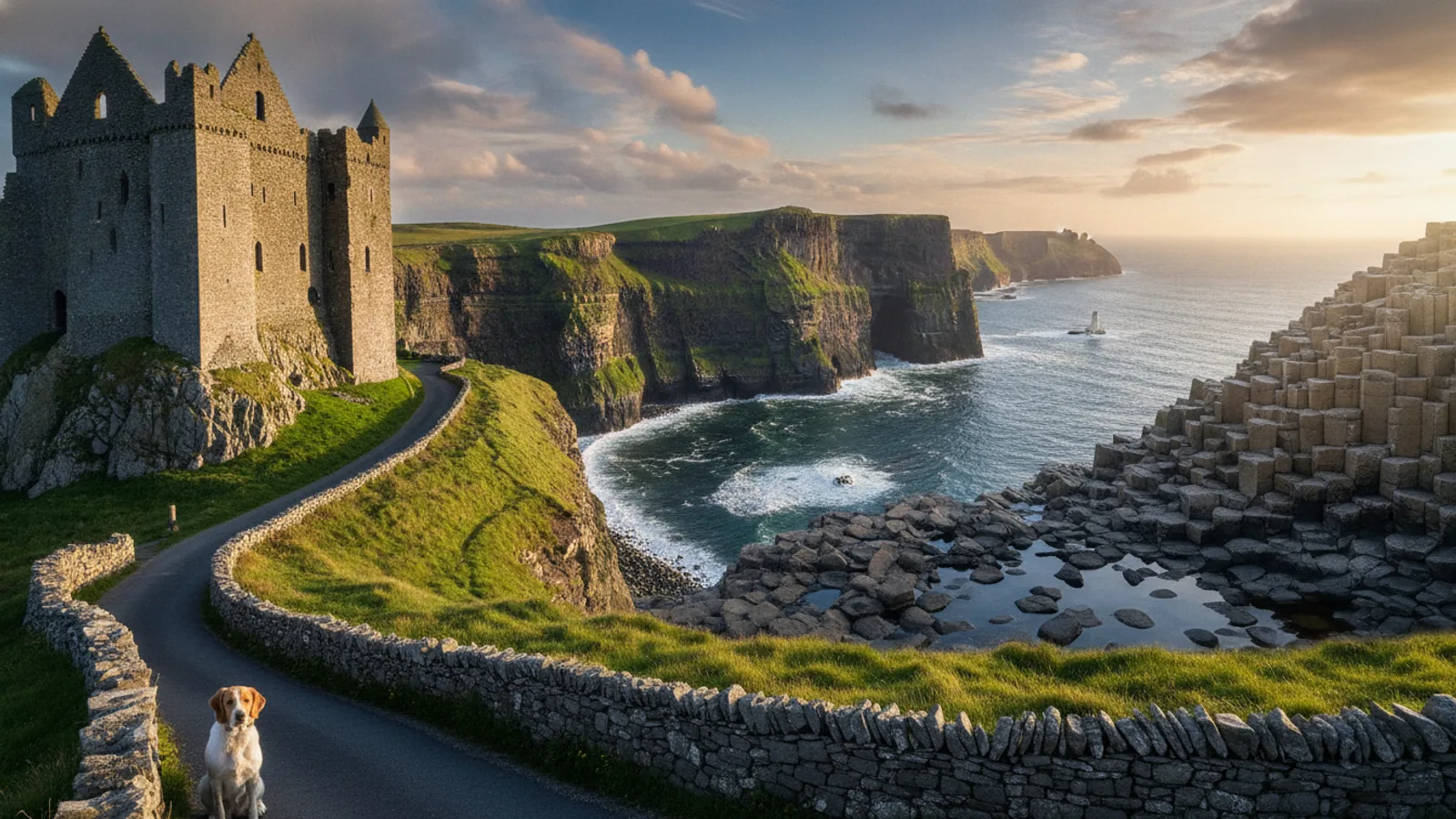
If your vision of Ireland involves dramatic sea cliffs, winding coastal roads, and a new breathtaking vista around every bend, the Wild Atlantic Way is your ultimate destination. This 1,600-mile touring route is not a single location but an epic journey along Ireland’s entire west coast. For our review, we focused on its most famous stretches, including the Ring of Kerry and the Dingle Peninsula. This is the best choice for independent travelers who crave adventure and want to experience the raw, untamed beauty of the Irish landscape. It requires a car and a bit more planning, but the payoff is an intimate connection with some of the most spectacular scenery on the planet. From the soaring Cliffs of Moher to the windswept beaches of County Donegal, this route is a photographer's and nature-lover's dream.
Pros
- Arguably some of the most stunning coastal scenery in the world
- The ultimate road trip experience with endless places to explore
- Passes through charming small towns and villages
- Offers a profound sense of freedom and adventure
Cons
- Requires renting a car and comfort with narrow, winding roads
- Weather is famously unpredictable and can impact views
- Takes significant time to explore even a small portion properly
Galway
Known as Ireland's cultural heart, Galway is the place to go for "craic" – that uniquely Irish blend of music, conversation, and fun. This vibrant, bohemian city is our top pick for travelers who want to immerse themselves in Ireland's living culture. Its compact, colorful city center is a joy to explore on foot, with streets that buzz with buskers, artists, and storytellers. By night, the city’s legendary pubs come alive with some of the best traditional music sessions in the country. Beyond the city's infectious energy, Galway is also the perfect base for exploring some of the west coast's most iconic sites, including the otherworldly landscapes of the Burren, the towering Cliffs of Moher, and the Aran Islands, making it a complete cultural and scenic package.
Pros
- Unmatched atmosphere for live traditional Irish music
- A vibrant, youthful, and artistic city vibe
- Perfect gateway to the Aran Islands and Cliffs of Moher
- Highly walkable city center packed with shops, pubs, and restaurants
Cons
- Extremely high demand for accommodation, especially during festivals
- West coast weather means you should always pack a raincoat
The Antrim Coast & Giant's Causeway
For a landscape that feels pulled from the pages of a fantasy novel, look no further than the Antrim Coast in Northern Ireland. This region is our top pick for travelers seeking truly unique, dramatic scenery and a touch of modern folklore. The crown jewel is the Giant's Causeway, a UNESCO World Heritage site of 40,000 interlocking basalt columns that defy belief. The journey itself, along the Causeway Coastal Route, is one of the world's great drives, linking other must-see sites like the Carrick-a-Rede Rope Bridge and the hauntingly beautiful Dark Hedges. Fans of HBO's *Game of Thrones* will be in heaven, as this area served as a primary filming location for the series. It offers a different flavor from the Republic of Ireland—wilder, more rugged, and steeped in myth.
Pros
- The Giant's Causeway is a one-of-a-kind natural wonder
- The Causeway Coastal Route is a spectacular drive
- A must-visit destination for Game of Thrones fans
- Often feels less crowded than major sites in the south
Cons
- Located in Northern Ireland (part of the UK), which uses the Pound Sterling
- A car is essential for proper exploration
- Fewer large towns and accommodation options than other regions
Cork & Kinsale
Often calling itself the "real capital" of Ireland, Cork offers a fiercely independent spirit and a phenomenal culinary scene, earning it our top spot for foodies and those seeking a more relaxed city experience. The city is built on the River Lee, with a charming center full of cozy pubs, historic lanes, and the unmissable English Market—a covered food market that's a feast for the senses. Just a short drive south lies Kinsale, a picture-perfect harbor town renowned as the gourmet capital of Ireland. Its narrow streets are lined with brightly colored buildings housing some of the country's best restaurants. This combination of a characterful city and a charming coastal town makes it the ideal destination for travelers who want to savor modern Irish cuisine and enjoy a slightly slower pace than the Dublin buzz.
Pros
- Exceptional food scene, from the English Market to Kinsale's seafood
- Vibrant yet manageable city that feels more local than Dublin
- Kinsale is one of Ireland's most picturesque and colorful towns
- Great base for exploring the rugged beauty of West Cork
Cons
- Fewer "bucket-list" historical attractions compared to Dublin
- Exploring the surrounding area requires a car for full flexibility
Buying Guide: How to Choose the Best Place in Ireland for You
Ireland offers a diverse range of experiences packed into a relatively small island. Choosing the right destination depends entirely on your personal travel style, interests, and practical constraints. Here’s what to consider to make sure your Irish vacation is a perfect fit.
Trip Duration
The amount of time you have is the single biggest factor in planning your itinerary. Don't try to see the entire country in one week.
- 3-4 Days: Stick to one city. Dublin is the perfect choice for a short trip or long weekend. You can explore the city thoroughly and even fit in a day trip to a nearby site like Glendalough or Newgrange.
- 7-10 Days: This is the most common trip length. You can combine a major city with one other region. A classic itinerary is Dublin (3 days) followed by a drive to Galway and the Cliffs of Moher (4 days). Alternatively, you could fly into Shannon and focus solely on the West (Wild Atlantic Way) and Southwest (Cork/Kinsale).
- 10-14+ Days: With two weeks, you can comfortably see multiple regions. You could complete a grand tour of the south, including Dublin, Cork, the Ring of Kerry, and Galway. Or, you could do a deep dive into the Wild Atlantic Way, driving from Cork all the way up to Donegal.
Your Travel Style
What kind of vacation are you looking for? Be honest about your priorities.
- History Buffs & Museum Lovers: Dublin is your best bet, with its National Museums, Trinity College, and Kilmainham Gaol. The ancient sites in the Boyne Valley (Newgrange) are also a must-see.
- Adventure Seekers & Hikers: The Wild Atlantic Way is your playground. You can hike, surf, kayak, and explore rugged coastlines to your heart's content. County Kerry and County Donegal are particularly good for outdoor activities.
- Music & Culture Lovers: Galway is the undisputed champion for traditional music and festivals. Doolin in County Clare is another tiny village famous for its nightly pub sessions.
- Foodies: Head south to Cork and Kinsale. The region's focus on fresh, local produce and innovative chefs has created an incredible culinary scene.
Transportation: To Drive or Not to Drive?
This is a critical decision that will shape your trip. While Ireland has a bus and rail network, they are primarily focused on connecting cities and larger towns.
- No Car: If you plan to stay in cities like Dublin, Cork, and Galway, you do not need a car. You can rely on walking, public transport, and tour buses for day trips. This is a stress-free and cost-effective option for city-focused trips.
- Renting a Car: To truly experience rural Ireland—the scenery of the Wild Atlantic Way, the quiet villages, the hidden ruins—a car is essential. It gives you the freedom to stop wherever you want and explore off the beaten path. Remember: in Ireland, you drive on the left side of the road, and many rural roads are very narrow. If you're not a confident driver, this can be a significant challenge.
Budget Considerations
Ireland can be an expensive destination, but there are ways to manage costs.
- Most Expensive: Dublin consistently has the highest prices for accommodation and dining. Popular tourist areas along the west coast can also be pricey during peak season.
- Better Value: You'll generally find better value in smaller towns and rural areas. Staying in Bed & Breakfasts (B&Bs) instead of hotels can also save money and provide a more authentic local experience.
- When to Go: The peak summer months (June-August) are the most expensive. Traveling in the shoulder seasons (April-May and September-October) offers a great balance of pleasant weather, fewer crowds, and lower prices.
Final Verdict: Best Places To Visit In Ireland
After a comprehensive analysis of Ireland's top destinations, Dublin remains our clear recommendation for the best overall place to visit in 2026. Its combination of accessibility, world-class historical and cultural attractions, and role as a perfect travel hub makes it the ideal starting point for the vast majority of visitors, especially those on their first trip to the Emerald Isle.
However, the "best" place is deeply personal. If your primary goal is to be awestruck by natural beauty and you relish the freedom of the open road, the dramatic cliffs and winding roads of the Wild Atlantic Way are unbeatable. For an immersion in lively music, art, and pub culture, the vibrant streets of Galway are calling your name. Choose the destination that aligns with your dream trip, and you’re guaranteed to have an unforgettable Irish adventure.
Best Places To Visit In Ireland 2026 FAQ
What is the best month to visit Ireland?
The best months to visit Ireland are typically May, June, and September. During this time, you'll experience the best balance of pleasant weather, longer daylight hours, and fewer crowds than the peak months of July and August. April and October can also be great options for lower prices, though the weather is more unpredictable.
How many days do you need to see Ireland?
We recommend a minimum of 7 to 10 days. This allows you to experience one or two regions without feeling rushed. For example, you could spend 3 days in Dublin and 4-5 days exploring the West Coast (Galway, Cliffs of Moher). If you want to see a significant portion of the country, such as a full loop, plan for at least 14 days.
Do I need to rent a car in Ireland?
It depends on your itinerary. If you're only visiting major cities like Dublin and Galway, you do not need a car; public transport and day tours will suffice. However, to explore the countryside, coastal routes like the Wild Atlantic Way, and small villages, a car is essential for flexibility and freedom.
Is Ireland expensive for tourists?
Ireland can be moderately to very expensive, comparable to other Western European countries. Dublin is the most expensive city for accommodation and dining. Costs can be managed by traveling in the shoulder season, staying in B&Bs or self-catering cottages, and enjoying pub meals instead of formal restaurants every night.
What is the difference between Ireland and Northern Ireland for a tourist?
The Republic of Ireland is an independent country and part of the European Union, using the Euro (€). Northern Ireland is part of the United Kingdom and uses the Pound Sterling (£). While the border is open and largely invisible (no passport checks for most nationalities), you will need to be aware of the currency difference. Both have incredible and distinct attractions to offer.