How To Plan A Rail First City Break In Europe
A practical step-by-step guide to how to plan a rail-first city break in Europe, including preparation, instructions, common issues, tips, and next steps.
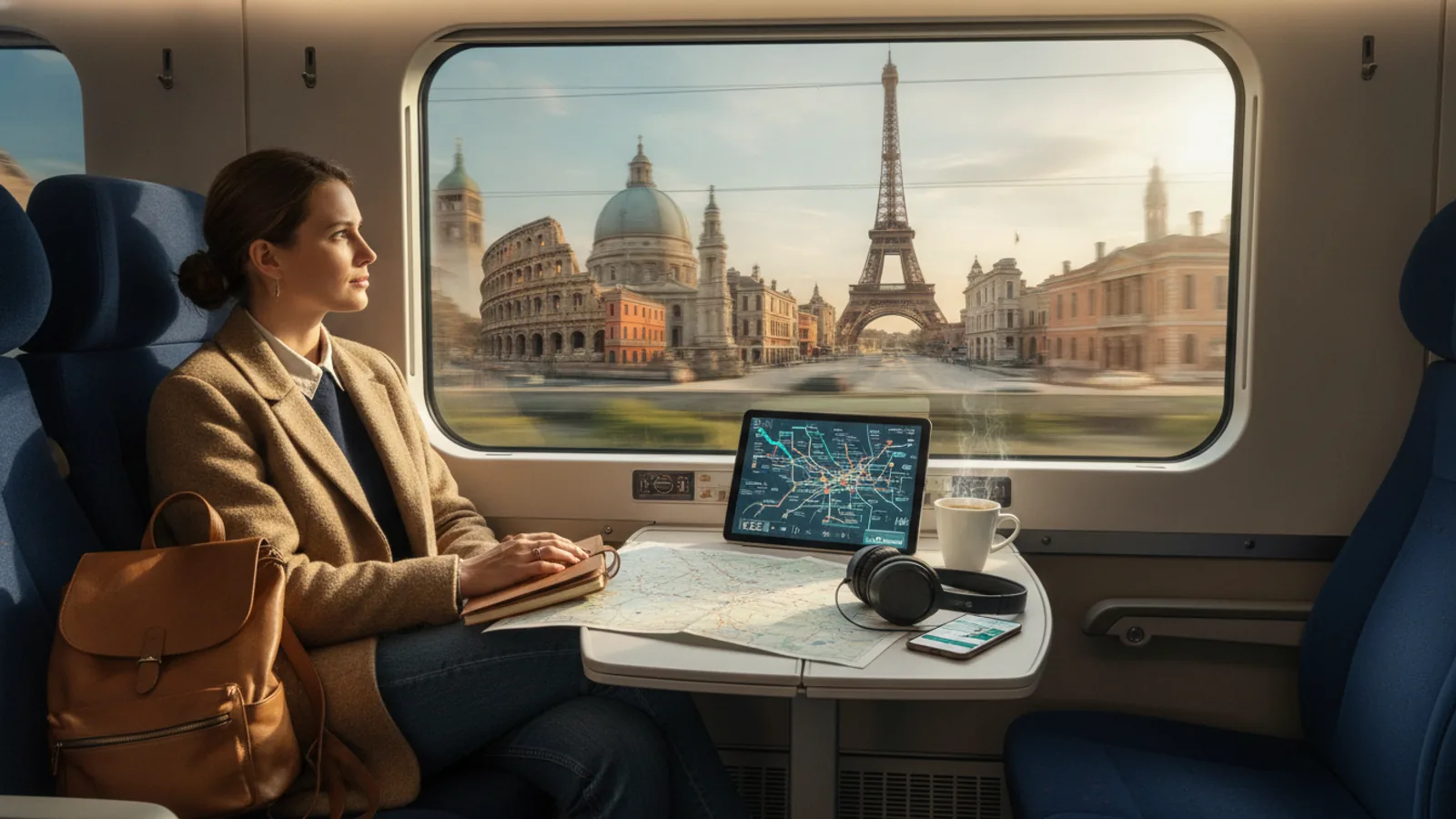
How To Plan A Rail First City Break In Europe
A rail-first city break means you use trains as your main transport between two or more European cities, skipping most short-haul flights and rental cars. This guide walks you through choosing a route, booking tickets at the right time, packing light, and handling delays so your trip runs smoothly. The biggest mistake travelers make is assuming one pass works everywhere, so check seat reservations and regional rail rules before you commit.
Fast Answer
- Start small: Pick 2–3 cities connected by direct trains of 2–4 hours each.
- Book early: Reserve high-speed and night trains 2–3 months ahead for the best fares.
Before You Start
- A passport valid for at least 6 months beyond your return date (for US citizens entering the Schengen Area)
- A spending plan for train tickets, seat reservations, and local transit passes — set a number before you browse routes
- A smartphone with the official rail app for the countries you’ll visit (or a reliable third-party app like Trainline)
- Access to a computer for comparing multi-city fares; phones are fine for booking but harder for side-by-side comparison
- One small wheeled bag or backpack that fits the overhead rack on a train — hard-sided suitcases over 55 cm can be a problem on regional trains
- Patience for the learning curve: each country has its own booking window, discount card, and reservation rules
Step-by-Step Instructions
Define your realistic radius
A rail-first trip works best when you limit travel time between cities to about 2–4 hours per leg. That gives you a morning or afternoon in transit and leaves the rest of the day free for sightseeing. Plot your start and end cities, then check the train times between them before you commit to a route.
For a first trip, choose a single country or two neighboring countries. France, the Netherlands, and Switzerland have excellent coverage. Spain and Italy are doable but slower on regional lines. Do not try to cross the continent in one week — you will spend more time in stations than in squares.
Draw a line on a map and confirm each leg is a direct train. A direct train removes the stress of tight connections and lost luggage. If you must transfer, give yourself at least 30–45 minutes at the interchange station, especially if it is a large hub like Paris Gare du Nord or London St Pancras.
Set your travel dates in stone
Train tickets in Europe are dynamic-priced, meaning the same seat costs more as departure day approaches. For most national rail operators, the cheapest advance fares open 60–180 days before departure. Lock in your city-to-city dates before you book accommodation so you can grab the low fares when they release.
Travel on weekdays outside peak morning and evening hours if you want lower prices and calmer trains. Tuesday, Wednesday, and Thursday mid-morning departures are usually cheaper than Friday or Sunday afternoon departures. Avoid the first and last day of a major holiday weekend entirely.
If your dates are flexible, use a flexible-date search on the rail operator’s website to see a 3-day price calendar. Many US travelers book flights first and then bend the train schedule around them — reverse that order and you will save meaningful money, often 30–50% on a standard ticket.
Compare point-to-point tickets versus a rail pass
For a rail-first trip covering 2–3 cities, separate point-to-point tickets usually win. They are often cheaper, they guarantee a specific seat, and they let you book on the cheapest operator, not just the national carrier. Use the official websites for each country — SNCF Connect for France, Deutsche Bahn for Germany, Trenitalia or Italo for Italy.
An Eurail or Interrail pass makes sense only if you take 4+ long train rides in a short window or you want the flexibility to hop on and off without fixed plans. But many high-speed trains require a mandatory reservation fee on top of the pass, and those fees add up fast. A pass is not a single payment that covers everything.
Write out a quick cost table: the price of each point-to-point ticket, the price of the pass, and the reservation fees you would pay on top of the pass. Choose whichever is cheaper. For most US travelers visiting on a 7–10 day trip, point-to-point is the clear winner.
Book high-speed and night trains at the right moment
Set a calendar reminder for the opening of the booking window for each leg of your journey. For French TGV and Italian Frecciarossa trains, that is usually 3–4 months out. For German ICE trains, it is often 6 months. If you know your travel date, aim to book within the first 1–2 weeks of the booking window opening.
Night trains — like those run by NightJet or the European Sleeper — are the exception: they sell out weeks in advance because there are few private cabins per train. Book these as soon as you confirm your dates. The cheapest seats in shared couchettes go first.
Check whether the fare you see includes a seat reservation or a mandatory supplement. On many French and Spanish high-speed lines, the base fare includes your seat. In Germany and the Netherlands, you can ride regional trains without any reservation, but intercity and ICE trains may require one at busy times.
Pack light with a train-first mindset
Because you will handle your own luggage through every station, stairs, and train vestibule, pack for movement. A 35–40 liter backpack or a small spinner under 55 cm long will fit the overhead rack on most European trains. Larger bags block the aisle and can force you to store them far from your seat.
Bring a small daypack for city wandering so you can leave your main bag at the hotel or in a station locker. Pack in layers and plan to wear your heaviest items on travel days. Washing clothes once mid-trip beats hauling 7 days of outfits.
Keep all valuables — passport, electronics, medication — in a slim crossbody bag that stays on your body through the train ride. Seat-back pockets and overhead racks are the easiest places for a quick grab if you step away. Trail your bag into the bathroom cubicle with you, not left on the seat.
Verify strike schedules and track closures
European rail runs on time most days, but industrial action and scheduled maintenance can disrupt your exact train. Check for strike notices on the national rail operator’s site and the local news 48 hours before each train leg. Rail apps often alert you to closed lines and replacement buses.
Major infrastructure works in countries like France and Germany can close a line for a full weekend. Use the operator’s construction calendar to see if your specific route is affected on your travel date. If so, you can often rebook for free within a window around the disruption.
Leave a buffer in your itinerary: schedule at least one full day buffer in each city, not a same-day connection to your flight home. That buffer absorbs a strike, a canceled train, or a missed connection without wrecking your return trip.
Plan local transit and walking routes
A rail-first break still needs a plan for moving around each city. Most European cities have a metro, tram, or bus network, and most accept contactless credit cards or an app-based ticket. Map your hotel to the main station and to your first sightseeing stop before you land, so you arrive without a confused mobile search on the platform.
Book accommodation near the central station or within a 15-minute walk of it. This cuts taxi costs and reduces the chance of hauling a bag across cobblestones. If you are in a city with heavy traffic, a tram stop right outside your hotel beats a cheaper room far from transit.
Download offline maps for each city to your phone before you depart. You will save battery not needed for a constant data connection and move like a local when your data allowance runs low.
Make a digital folder with every confirmation
Keep all train tickets, seat reservations, hotel confirmations, and insurance documents in one digital folder on your phone. Save a screenshot of each QR code or PDF ticket, not just a link to your email. Many stations have spotty internet, and a screenshot never fails.
Also save the official rail app for each country you travel through, plus the contact number for the operator in case of disruption. Store a photo of your passport and a copy of your travel insurance policy in the same folder, in case of loss or theft.
Before you leave for the station, check the live departure board on the operator’s app. Platforms can change up to 10 minutes before departure, and big stations announce changes only over the PA or on the board.
Arrive at the station early and validate as needed
Get to the station 30–45 minutes before departure for high-speed and international trains. You need time to find the right platform, possibly pass a baggage check on international routes, and buy food or water for the ride. For regional trains, 15–20 minutes is enough.
Check whether your ticket needs validation. In Italy and some other countries, paper tickets must be stamped in the yellow validation boxes before boarding. Fines for unvalidated tickets can be steep — up to €100 — even if you clearly show you paid for the ride.
Find your coach and seat number using the platform boards, and look for the small car number printed on the side of each train. Move toward the front of the platform where the board tells you your car will stop, so you do not sprint down the entire platform with your bag.
Handle delays and missed connections smart
When your train is delayed, do not panic. Most national operators have an automatic compensation scheme — in the EU, delays of 60 minutes or more typically qualify for 25% of the ticket price refunded, and 50% for delays of 2+ hours. Keep your ticket and a photo of the departure board as proof.
If you will miss a connection because of a delay, get off at the next station and ask the station staff or use the operator’s app to rebook the next available train. Many high-speed tickets are valid on the next train of the same operator when you have a delay-related reason. Do not buy a new ticket without asking first.
If you are travelling on a multi-country route and a delay makes you miss your last train of the day, the operator is usually responsible for arranging accommodation. Ask at the station office before booking a hotel yourself; reimbursement is simpler if the operator arranges it.
Quick Reference
| Situation | Use this | Why |
|---|---|---|
| 2–3 cities, 7–10 day trip | Point-to-point tickets | Usually cheaper than a pass, guaranteed seat, fewer reservation fees |
| 4+ long rides in 2 weeks | Eurail or Interrail pass | Flexibility to change plans without losing the fare |
| Night train journey | Book as soon as dates firm | Private cabins and cheapest couchettes sell out fast |
| High-speed train in France or Spain | Check seat reservation fee | Mandatory reservations cost €10–€30 per ride, even with a pass |
| Strike or track closure | Check operator app and station board | Replacement buses and free rebooking apply to all ticket types |
| Delayed 60+ minutes | Claim compensation online | EU rules give 25% back for 1+ hour delays |
How To Plan A Rail First City Break In Europe FAQ
Common Issues
If the result is not working as expected, return to the previous step, check the material or setting involved, and make one adjustment at a time for how to plan a rail-first city break in Europe.
Advanced Tips
Once the basics are consistent, change only one variable at a time and keep notes on what improves the result for how to plan a rail-first city break in Europe.
Is a rail pass worth it for a 7-day trip to two cities?
Usually no. Two or three point-to-point tickets are often cheaper and include a seat. A pass makes sense only if you change cities every day or want total flexibility without advance bookings. For a relaxed two-city break, skip the pass.
How far in advance should I buy European train tickets?
Book high-speed and night trains as soon as the operator opens the sale, often 60–180 days out. For regional trains, you can buy a day or two before. The cheapest fares sell in the first weeks of the window. Check the operator’s site for exact dates.
Do I need a seat reservation on top of a Eurail pass?
That depends on the train. Many high-speed TGV, AVE, and Frecciarossa trains require a reservation costing €10–€30 each. Regional trains are usually pass-inclusive. Check each leg on the operator’s website or the Eurail app before you board. A reservation-free trip on a high-speed line is rare.
What happens if my train is canceled or delayed?
EU passengers are entitled to compensation for delays of 60+ minutes (25% of the ticket) and 120+ minutes (50%). For cancellations, the operator must offer an alternative or refund. Keep your ticket and a photo of the departure board. Claim through the operator’s online portal.
Can I bring luggage on a European train?
Yes. There is no standard weight limit, but keep bags to a size you can lift overhead. Most operators allow two large items and one small personal item. On busy trains, space runs out — pack light and hang onto your valuables.
Should I book my train through a third-party app or the official railway?
Buy from the official national operator when you can. Third-party apps are convenient for comparing schedules, but they can mark up prices, add booking fees, and skip showing mandatory seat reservation costs. Official sites always show the complete fare.
Final Checklist for how to plan a rail-first city break in Europe
- Choose 2–3 cities connected by direct trains of 2–4 hours each
- Decide between point-to-point tickets and a rail pass based on a written cost comparison
- Book high-speed and night trains within the first days of the booking window
- Confirm seat reservation requirements for every train leg before you travel
- Pack a bag under 55 cm long with a slim daypack for city walking
- Check for strikes and track closures 48 hours before each departure
- Download offline maps and save all tickets as screenshots in one folder
- Arrive 30–45 minutes early for high-speed and international trains
- Validate paper tickets if the country requires it, especially in Italy
- Photograph any departure board that shows a delay or cancellation as proof
- Build one full day buffer in each city to absorb travel disruptions