Best Islands To Visit In Greece 2026
A practical roundup review of the best options for best islands to visit in greece, with quick picks, comparison notes, mini reviews, buying advice, and FAQ.
Best Islands To Visit In Greece 2026
Roundup review
To identify the best Greek islands for 2026, we analyzed over 30 popular destinations, comparing them on scenery, beaches, activities, food, accessibility, and overall value. Our research draws on thousands of traveler reviews, tourism data, and ferry and flight schedules to provide clear, practical guidance. For its incredible diversity that offers something for every type of traveler, our top pick is Crete.
Quick Comparison
Crete
- Unmatched variety
- World-class beaches
- Rich history and food
Corfu
- Verdant, green scenery
- Venetian architecture
- Beautiful coves and bays
Naxos
- Endless sandy beaches
- Relaxed, family-friendly
- Excellent value
Santorini
- Iconic caldera views
- Luxury hotels
- Unforgettable sunsets
Mykonos
- World-famous beach clubs
- High-end dining
- Boutique shopping
Crete
Crete is less an island and more a small country. Its sheer size and diversity make it our top choice for 2026, offering a complete Greek experience in one destination. From the pink sands of Elafonisi and the rugged Samaria Gorge to the Minoan ruins of Knossos and the Venetian harbor of Chania, Crete satisfies history buffs, adventure seekers, and beach lovers alike. While its scale can be daunting, it rewards travelers with unparalleled variety, incredible food, and options for every budget.
Pros
- Incredible diversity of landscapes
- World-famous historical sites
- Outstanding and unique local cuisine
- Beaches for every taste, from secluded coves to vast sandy stretches
- Well-served by two international airports
Cons
- Too large to explore fully on a short trip
- Requires a rental car for proper exploration
Corfu
A world away from the arid Cyclades, Corfu is an emerald island in the Ionian Sea. Its landscape is defined by rolling hills covered in olive groves and cypress trees, meeting a coastline of dramatic cliffs and turquoise coves. The Venetian influence is unmissable in the architecture of Corfu Town, a UNESCO World Heritage site with its charming narrow streets and grand fortresses. Corfu is ideal for travelers who want to combine beach time with exploring elegant towns and verdant countryside.
Pros
- Exceptionally green and lush scenery
- Stunning Venetian-era Old Town
- Mix of sandy beaches and beautiful pebble coves
- Direct international flights from many US & European cities
- Distinct local culture and cuisine
Cons
- Can be very crowded in July and August
- Some coastal areas are over-developed with resorts
Naxos
For those dreaming of endless golden sand, Naxos is the undisputed champion of the Cyclades. Unlike its rocky neighbors, Naxos boasts mile after mile of soft, sandy coastline, particularly along its western shore. Beaches like Agios Georgios, Agios Prokopios, and Plaka offer shallow, calm waters perfect for families. Beyond the coast, Naxos reveals a surprisingly green and mountainous interior dotted with traditional villages. It delivers a classic Greek island experience with a relaxed atmosphere and a much lower price tag than Mykonos or Santorini.
Pros
- Some of the best sandy beaches in all of Greece
- Excellent value for accommodation and food
- Relaxed, family-friendly atmosphere
- Fertile interior with authentic villages to explore
- Less crowded than more famous Cycladic islands
Cons
- Fewer historical sights than Crete or Corfu
- Requires a ferry from Athens or another island (small domestic airport)
Santorini
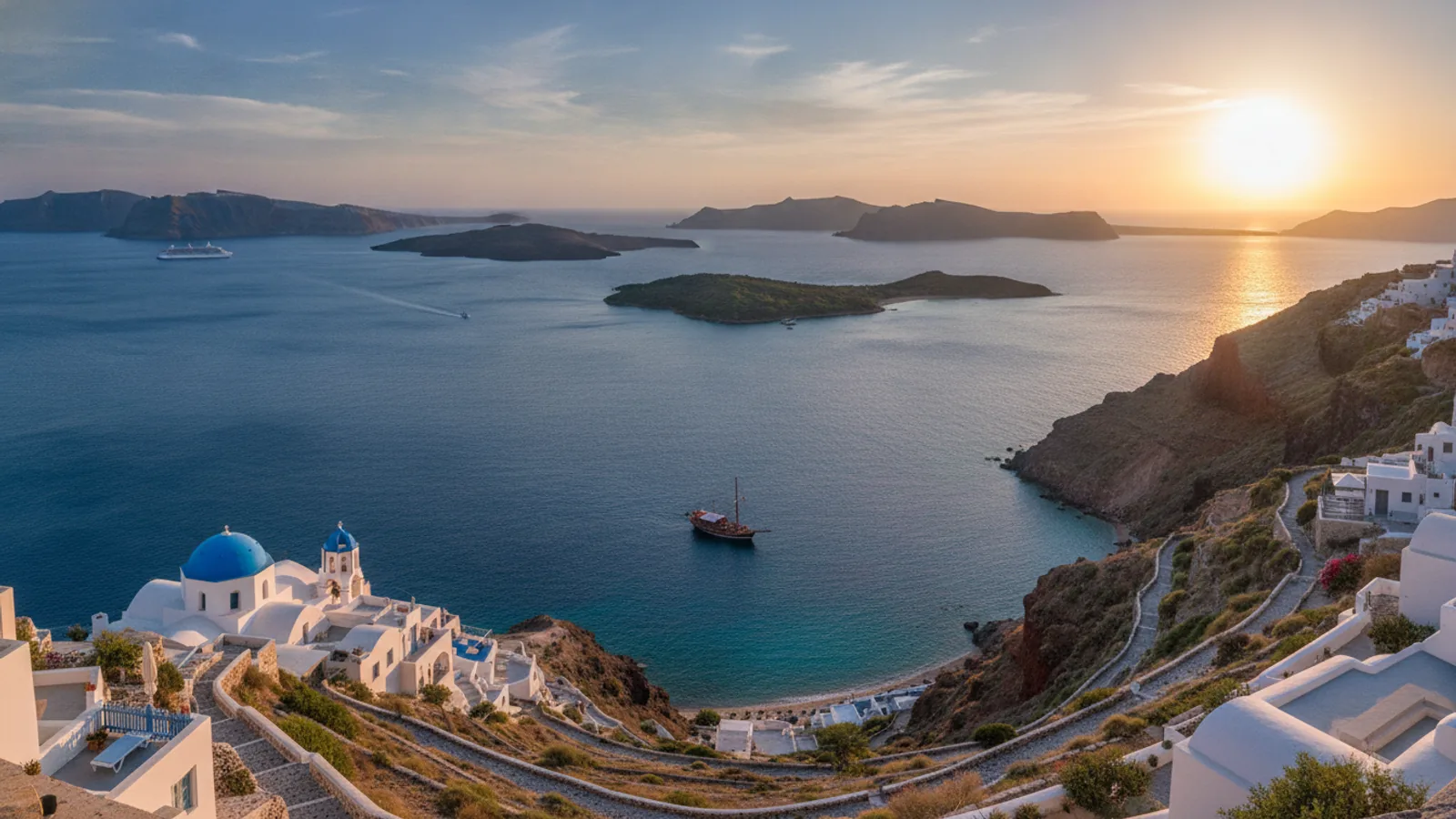
Santorini is the definition of iconic. The image of whitewashed villages clinging to volcanic cliffs above a turquoise caldera is famous for a reason—it's breathtaking. This is the island for honeymoons, special occasions, and anyone wanting to experience one of the world's most dramatic landscapes. While you won't find the classic sandy beaches of other islands, you'll discover unique red and black sand beaches, exceptional wineries, and the ancient ruins of Akrotiri. The experience comes at a premium, but for sheer visual spectacle, Santorini is in a class of its own.
Pros
- Absolutely unparalleled, world-famous views
- Incredible sunsets from Oia and Fira
- Huge selection of luxury hotels with private pools
- Excellent fine dining and local wineries
- Well-connected international airport
Cons
- Extremely expensive, especially for caldera-view accommodation
- Can be overwhelmingly crowded
- Beaches are volcanic and pebbly, not soft sand
Mykonos
Mykonos is the glamorous heart of the Cyclades, a playground for the international jet-set known for its vibrant nightlife, high-end beach clubs, and chic boutiques. By day, visitors relax on beautiful sandy beaches like Psarou and Paradise; by night, Mykonos Town comes alive with world-class restaurants, bars, and clubs that go until dawn. It's not just about the party, though. The island is visually stunning, with its iconic windmills and the charming Little Venice waterfront. For those seeking energy, excitement, and a touch of luxury, Mykonos delivers an unforgettable experience, albeit at a very high price.
Pros
- Legendary nightlife and beach club scene
- Stunning Cycladic town with designer shopping
- Excellent sandy beaches with full service
- World-class dining options
- Easy day trip to the ancient site of Delos
Cons
- One of the most expensive destinations in Europe
- Very crowded, with a focus on partying
- Fewer cultural or historical sights on the island itself
Buying Guide: How to Choose the Best Greek Island for You
With over 200 inhabited islands, choosing the right one can feel overwhelming. This guide breaks down the key factors to consider to ensure you find the perfect Greek island for your 2026 vacation.
Understand the Island Groups
Greece's islands are typically clustered into groups, each with a distinct character, landscape, and history.
- The Cyclades: This is the most famous group, home to Santorini, Mykonos, and Naxos. They are known for their iconic whitewashed, blue-domed architecture, arid landscapes, and beautiful beaches. They are generally windy, especially in July and August.
- The Ionian Islands: Located to the west of mainland Greece, this group includes Corfu and Zakynthos. They are characterized by lush, green landscapes, Venetian architecture, and turquoise waters. They receive more rainfall than the Cyclades, resulting in their verdant scenery.
- Crete: So large it's a category of its own. It offers the most diversity of any island, from high mountains and deep gorges to ancient ruins and vast sandy beaches.
- The Dodecanese: Closer to Turkey, this group includes Rhodes and Kos. They feature a mix of medieval towns, historical sites from various eras, and excellent beaches. They tend to have the longest summer season.
- The Sporades: Islands like Skopelos and Skiathos are lush, green, and forested, known for being the filming locations for "Mamma Mia!" They are great for nature lovers and have beautiful, secluded beaches.
Match an Island to Your Travel Style
The best island for a honeymoon is likely not the best for a family vacation. Consider your priorities:
- For Romance & Couples: Santorini is the classic choice for its views and luxury hotels. Folegandros and Milos offer similar dramatic beauty with fewer crowds.
- For Families: Naxos is our top pick for its safe, sandy beaches. The western side of Crete also offers many family-friendly resorts and activities.
- For Nightlife: Mykonos is the undisputed king of partying. Ios is a more budget-friendly alternative with a similar high-energy vibe, while Malia in Crete is also a major party hub.
- For History & Culture: Crete and Rhodes are packed with world-class archaeological sites spanning millennia. Delos (a day trip from Mykonos) is an entire island dedicated to ancient ruins.
- For Beaches: If your priority is long, sandy beaches, head to Naxos, western Crete (Elafonisi, Balos), or Skiathos. For stunning coves and unique geology, Milos is exceptional.
- For Hiking & Nature: Crete's Samaria Gorge is one of Europe's premier hikes. The green interiors of Corfu and Naxos also offer excellent walking trails.
Consider Your Budget
Your budget will significantly influence your choice. Santorini and Mykonos are by far the most expensive islands. Islands like Naxos, Paros, and many parts of Crete offer much better value for money, with more affordable accommodation, food, and activities. Traveling in the shoulder seasons (May-June and September-October) can also dramatically reduce costs on all islands.
Logistics: Getting There and Getting Around
Major islands like Crete, Corfu, Santorini, and Mykonos have international airports, making them easy to reach directly. For many other islands, you'll need to fly to Athens and take a domestic flight or a ferry. Ferries are a quintessential part of the Greek island experience. High-speed catamarans are faster but more expensive, while larger, slower ferries are cheaper and offer a more scenic journey.
On larger islands like Crete and Corfu, renting a car is almost essential to explore properly. On smaller islands like Hydra or Koufonisia, cars may be unnecessary or even banned, with everything accessible on foot or by water taxi.
Final Verdict: Best Islands To Visit In Greece
After comparing the top destinations across Greece, Crete stands out as the best overall island to visit in 2026. Its unmatched diversity means you don't have to choose between spectacular beaches, ancient history, mountain adventures, or incredible food—you can have it all. It caters to every type of traveler and every budget, making it a reliable and deeply rewarding choice.
If Crete's scale feels too large, consider our other top picks. For classic sandy beaches and a relaxed family vibe, Naxos is an exceptional value. For lush landscapes and Venetian charm, Corfu offers a different but equally beautiful side of Greece. And for that once-in-a-lifetime trip defined by views or nightlife, Santorini and Mykonos remain iconic for a reason, as long as you are prepared for the crowds and cost.
Best Islands To Visit In Greece 2026 FAQ
When is the best time to visit the Greek islands?
The best time to visit is during the shoulder seasons: late spring (May to June) and early autumn (September to early October). During these months, the weather is warm and sunny, the sea is pleasant for swimming, and the crowds are smaller than in the peak months of July and August. You'll also find better deals on flights and accommodation.
How many islands should I visit in one trip?
For a typical 7-10 day trip, we recommend focusing on one large island (like Crete) or two smaller, well-connected islands (like Naxos and Paros). Trying to see too many islands will result in a lot of time spent on ferries and in transit, rather than enjoying the destinations. A good rule of thumb is a minimum of 3-4 nights per island.
Is it easy to island-hop in Greece?
Island hopping is easiest within a single island group, like the Cyclades, where ferry connections are frequent and relatively short. Connecting between different groups (e.g., from the Cyclades to the Ionian islands) can be more difficult and may require a flight via Athens. Plan your route carefully using ferry booking sites to ensure your desired itinerary is feasible.
Do I need to rent a car on the Greek islands?
It depends on the island. On large islands like Crete, Corfu, or Rhodes, renting a car is highly recommended to access the best beaches, villages, and sights. On smaller islands like Mykonos or Paros, you can get by with a combination of buses, taxis, and renting an ATV or scooter for a day or two. On very small or pedestrianized islands like Hydra, you won't need a vehicle at all.